For over a decade, La Salle University nursing students have had the chance to gain experience caring for underserved populations at the Mexican Consulate in Philadelphia.
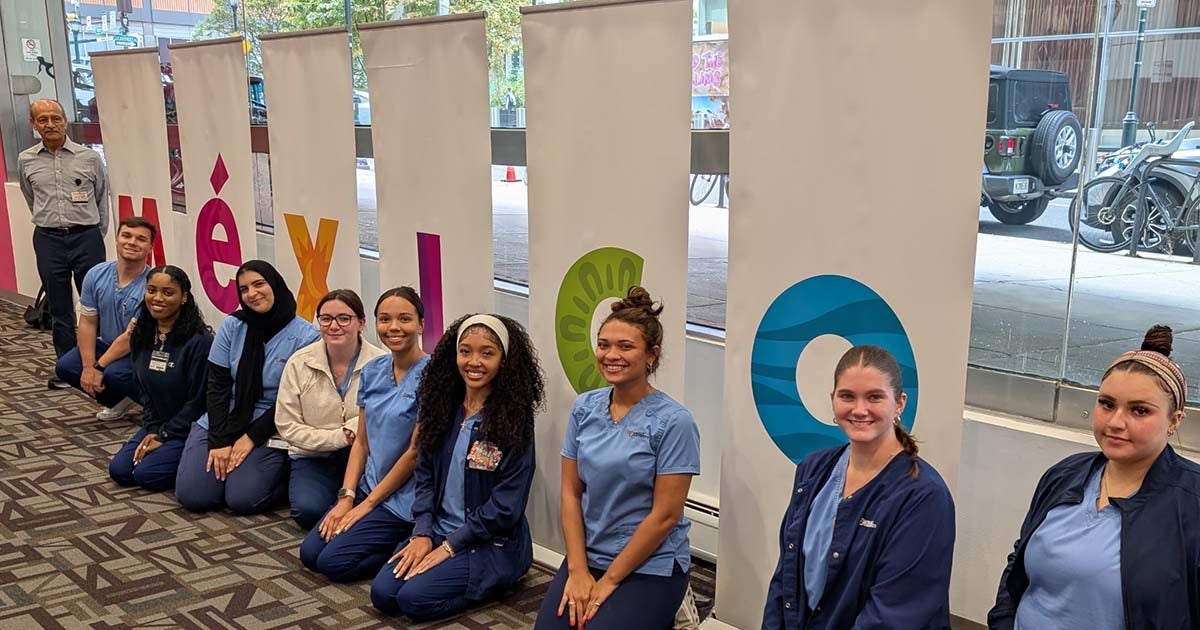
In 2014, Jeannine Uribe, Ph.D., R.N., associate professor of nursing, took Explorer nursing students to assist with Health Fairs at the Consulate, after receiving an invitation to the event. These health fairs turned into further opportunities for La Salle’s Nursing Program with screenings at the Consulate being included in clinical experiences for nursing and public health students.
A 12-year partnership between La Salle University’s School of Nursing and Health Sciences and the Mexican Consulate in Philadelphia is giving nursing students a real-life educational experience in caring for underserved populations.
In 2014, Jeannine Uribe, Ph.D., R.N., associate professor of nursing, took Explorer nursing students to assist with Health Fairs at the Consulate, after receiving an invitation to the event. These health fairs turned into further opportunities for La Salle’s Nursing Program with screenings at the Consulate being included in clinical experiences for nursing and public health students. Uribe has also taken students to the Consulate before travelling to Mexico City on Travel Study trips to provide practice in both their nursing and communication skills.
“Working with the Mexican Consulate is a wonderful experience. We are helping them to screen people of Mexican descent, and they are teaching us about our southern neighbors. The ambassador greets each group to explain his role in Philadelphia, and he welcomes our students thanking them for their assistance,” Uribe said. “Students gain skills with community screenings and educating the public. We hope to continue our relationship with the Mexican Consulate.”
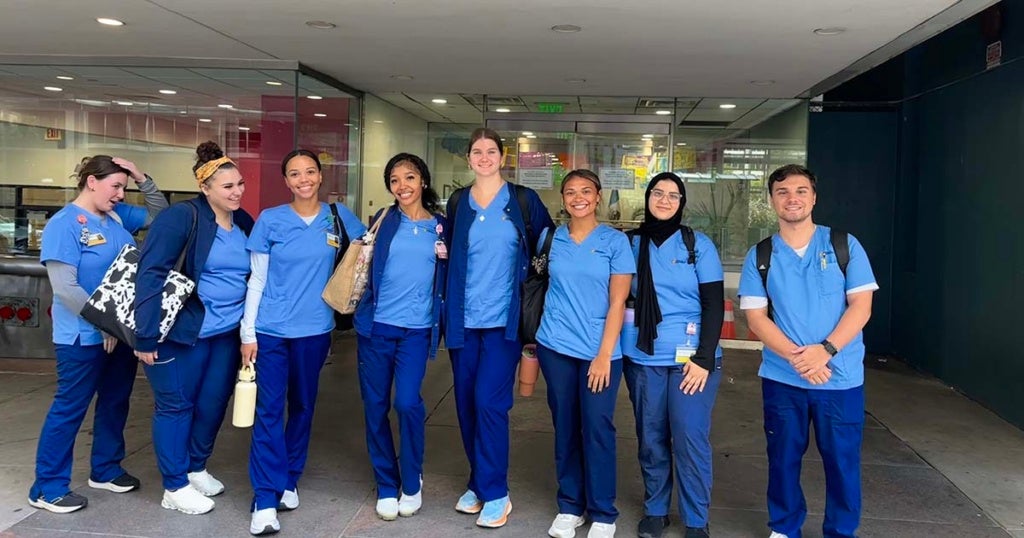
Laurie Colborn, Ed.D., MSN, R.N., an assistant professor of nursing at La Salle, is one of the faculty members who has taken students to the Consulate for clinicals. In the Fall 2025 semester, she had two groups of students who were on site for the semester.
“Students have consistently shared that their clinical rotation at the Mexican Consulate has provided a valuable opportunity to actively apply classroom concepts in a real-world setting,” Colborn said. “This hands-on experience has fostered a deeper understanding of public health nursing, as well as a greater appreciation for its critical role and impact within our communities.”
Nursing major Rawan Froukh, ‘26, was in one of Colborn’s clinical rotations at the Consulate.
“The experience was very eye-opening and an amazing learning opportunity,” Froukh said. “My peers and I were exposed to a new geography of clientele that allowed us to see a new perspective throughout common trends and personal life.”
In her time at the Consulate, Froukh, alongside the other students on the clinical rotation, gave screenings, including blood pressure readings, glucose blood sugar checks, body mass index (BMI) calculations, as well as providing general health information to the clients that they cared for. She also got to see, and was surprised by, what staying healthy looked like for people who don’t have access to free healthcare.
“Learning to adapt through language barriers, getting to see how clients navigate through life with underlying health issues, such as uncontrolled hypertension without even knowing it, or if they are unable to get access to healthcare was really surprising to me,” Froukh said. “I was unaware that such a large community faced so many challenges on a regular basis.”
One of her most valuable takeaways from her time in the clinical rotation was learning how to adapt to the patient that’s in front of you. In the case of those at the Mexican Consulate, to get through the language barriers, Froukh learned some Spanish terms and phrases that would help her make navigating the care they were receiving easier for the patients.
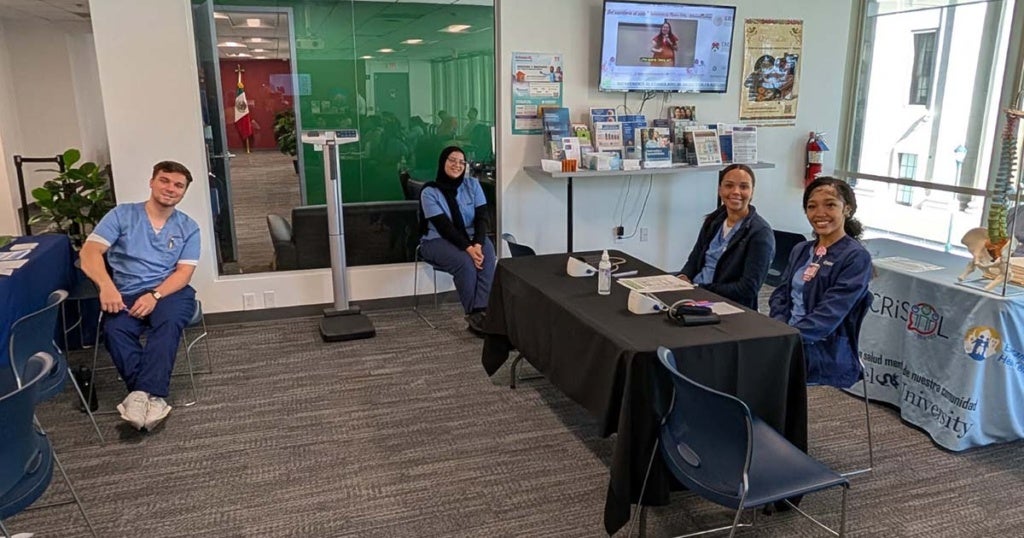
Like Froukh, Nicolette Browne, ‘26, who was in the second group of clinical students at the Consulate, gained new insight during the semester she spent there.
“It was really great,” Browne said. “I actually really enjoyed it, and I think pretty much everyone in my clinical group did too.”
Browne noted that she and her peers have been discussing populations that don’t have access to healthcare since their freshman year of college. Through this clinical, they were meeting impacted individuals and hearing their stories in real-time. Being able to provide them with the help and resources they needed was one of the highlights of the experience.
“We built a lot of really good relationships while we were there, and I think I can speak for my whole clinical group, when we were leaving, we almost didn’t want to leave,” she said. “It was a great experience.”
As a nursing students, Browne said, she and her peers get used to seeing patients in a hospital setting. One of the most valuable things she learned at the Consulate was the idea of almost going back to basics, really communicating with her patients, and meeting them where they are.
“You’re used to just seeing people already admitted in a hospital bed and they know what’s going on, they know the routine, or at least you think they do. So, it kind of makes you go back and check yourself, and be like wait they might not, let’s sit and talk and go through this,” she said. “This really helped me get good at explaining what I’m doing, why I’m doing it, and what the results mean.”
Working as a technician at Children’s Hospital of Philadelphia, Browne is already seeing the lessons in communication that she learned at the Consulate paying off through using them to help pediatric patients and families navigate the healthcare system.
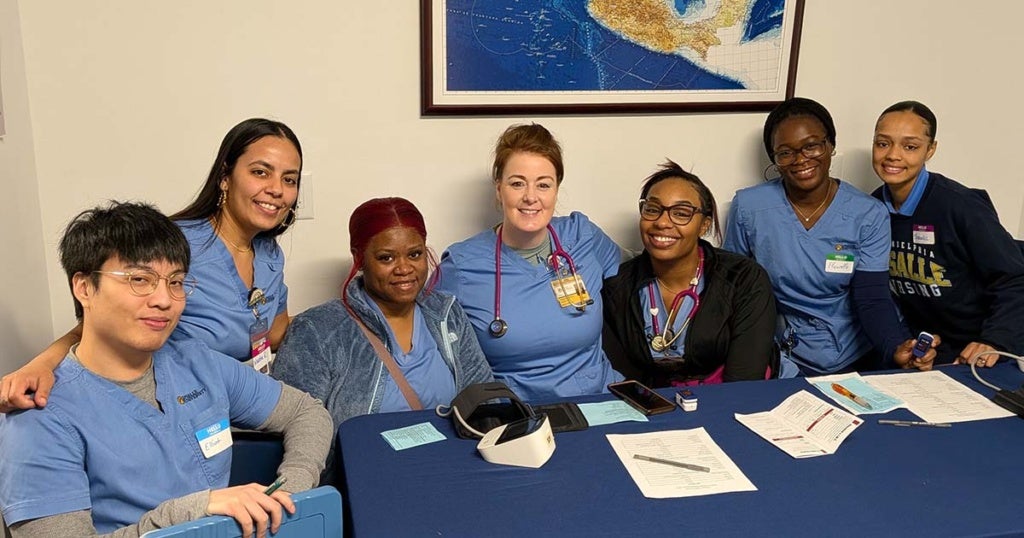
“Not everyone read the same textbook you did,” she said. “You kind of have to really ground yourself and realize, okay, I have to get out of the textbook mindset, I have to be ready to exchange information in a way that makes sense.”
Both Froukh and Browne value the experience they had at the Mexican Consulate and the way it’s helped them to understand how to adapt the care they provide to give all of their patients the best healthcare experience, whether that’s learning new ways to communicate or figuring out the resources a patient needs to take home with them.
“I definitely think that it helped me prepare for my future in nursing,” Froukh said. “It’s always good to learn more about diverse clients and to be prepared for any encounter that we may face in a healthcare setting.”
–Naomi Thomas
The post Getting out of the textbook mindset appeared first on La Salle University.





0 Commentaires